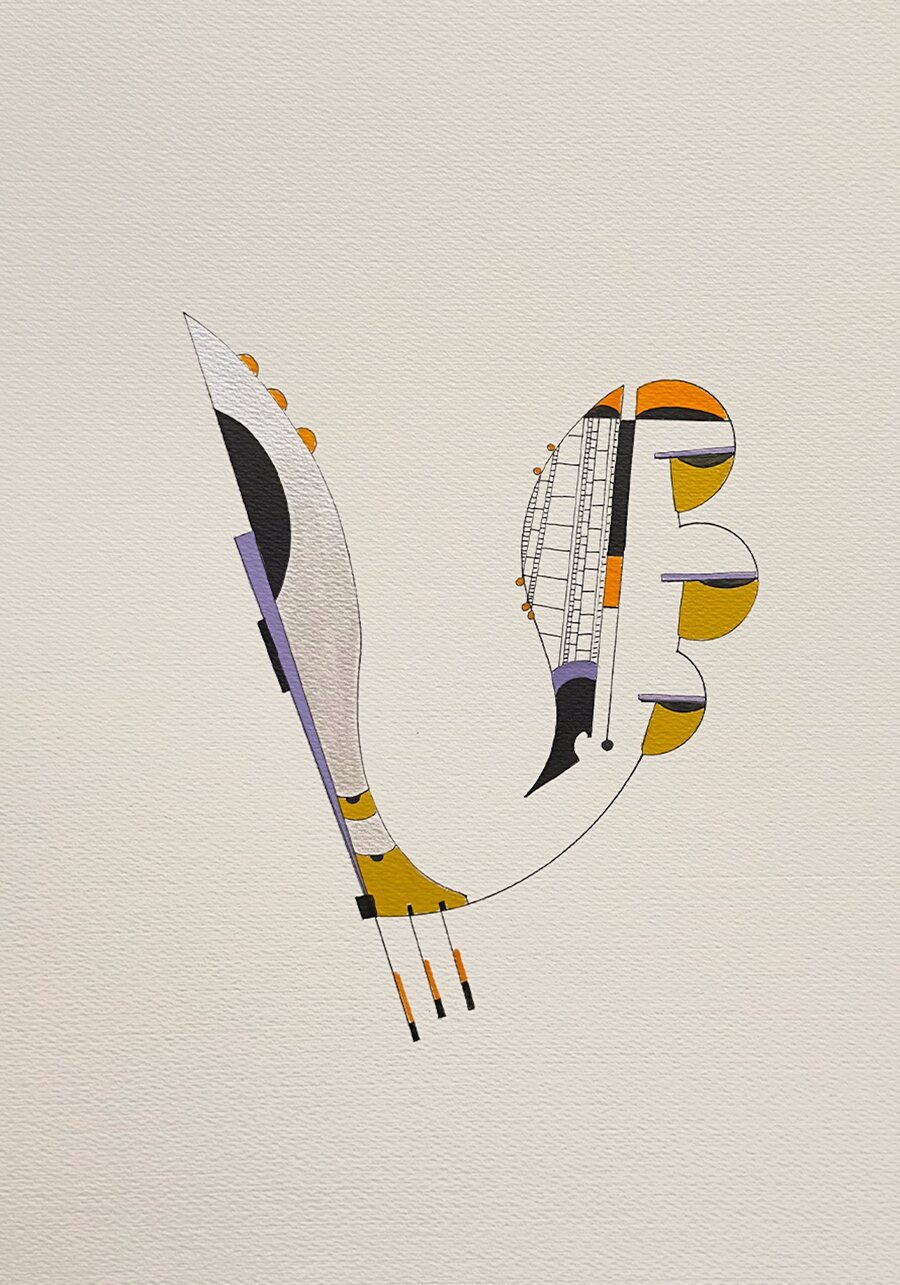
A multidisciplinary art installation

Chaises

The social geometry of Luxembourg Gardens — where metal chairs form silent societies each morning, creating choreographies no one directs.

Jimmy Gardner · Allard van Hoorn · Quinn Lewis · Charlotte Tampol

Location
24 rue Chapon, 75003 Paris
Forms
Sculpture · Painting · Sound · Installation
Exhibition
20–22 October 2026

Every morning, the chairs rearrange themselves

In Luxembourg Gardens, the iconic green metal chairs are freely moved by visitors throughout the day. By the next dawn, a gardener redistributes them into a neutral grid. Then the choreography begins again — lovers pull two chairs face-to-face, a solitary reader angles one toward the sun, a group of students drags six into a messy circle for lunch.

These chairs form a social geometry — a silent, unscripted choreography of human connection, solitude, conflict, and tenderness. Chaises translates this daily phenomenon into four simultaneous art forms.

Simulated field: 12 chairs over 6 hours — dawn grid to social formations
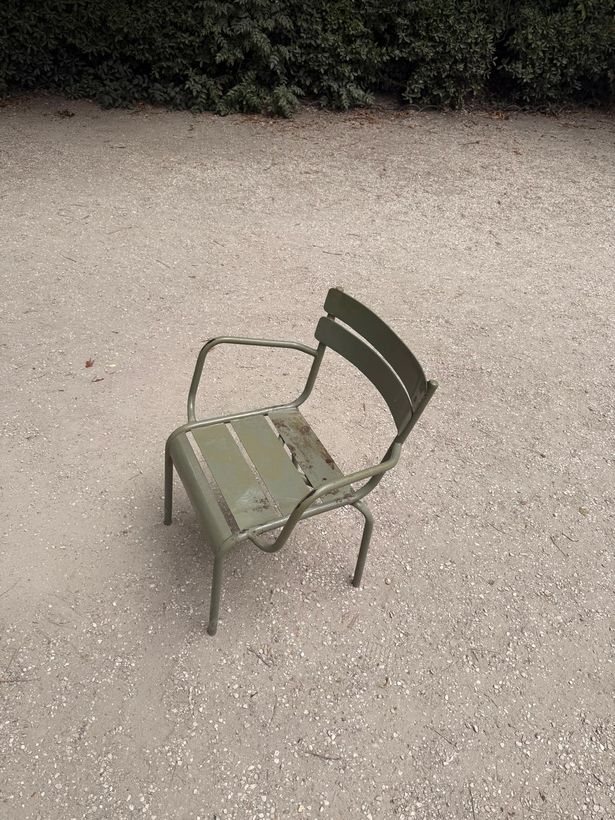
A single green metal chair left alone on the gravel in Luxembourg Gardens.
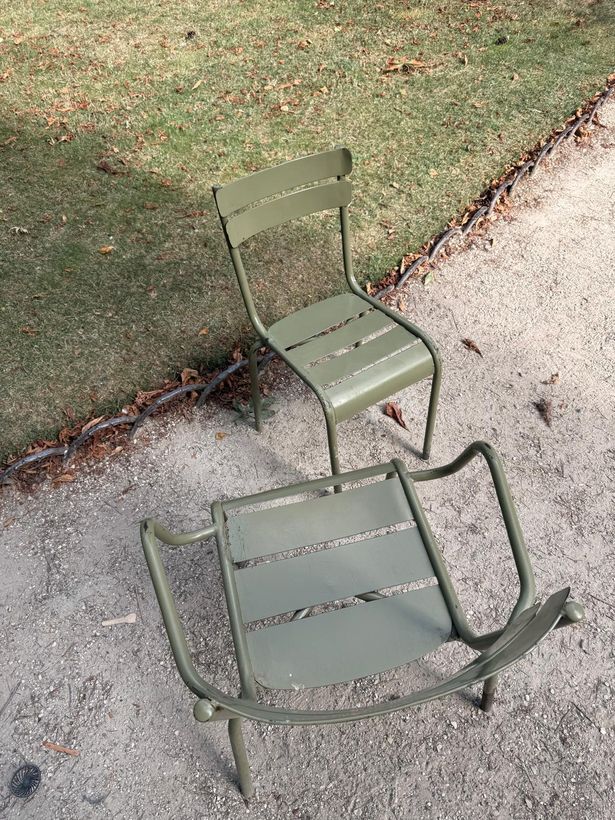
Two chairs on the gravel, one upright and one tipped back, facing each other.
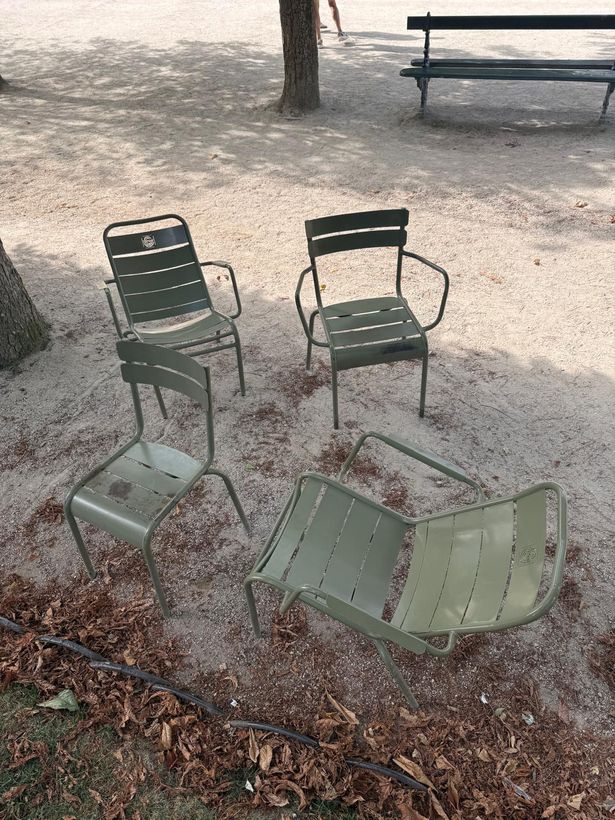
Four chairs pulled into a loose circle under a tree in Luxembourg Gardens.

One chair, two, then a group — Luxembourg Gardens, left exactly as found.

From social archetype to four art outputs — simultaneously

Rather than literal GPS tracking, Chaises uses human archetypes as choreographic data. Each scenario observed in the garden is scored as a set of chair paths — proximity, orientation, velocity, stillness — and that spatial logic feeds every art output at once through a shared data pipeline.

Sculpture

Chair trajectories become 3D printed ribbon sculptures — width, twist, and colour encoding each figure’s social biography over time.

Painting

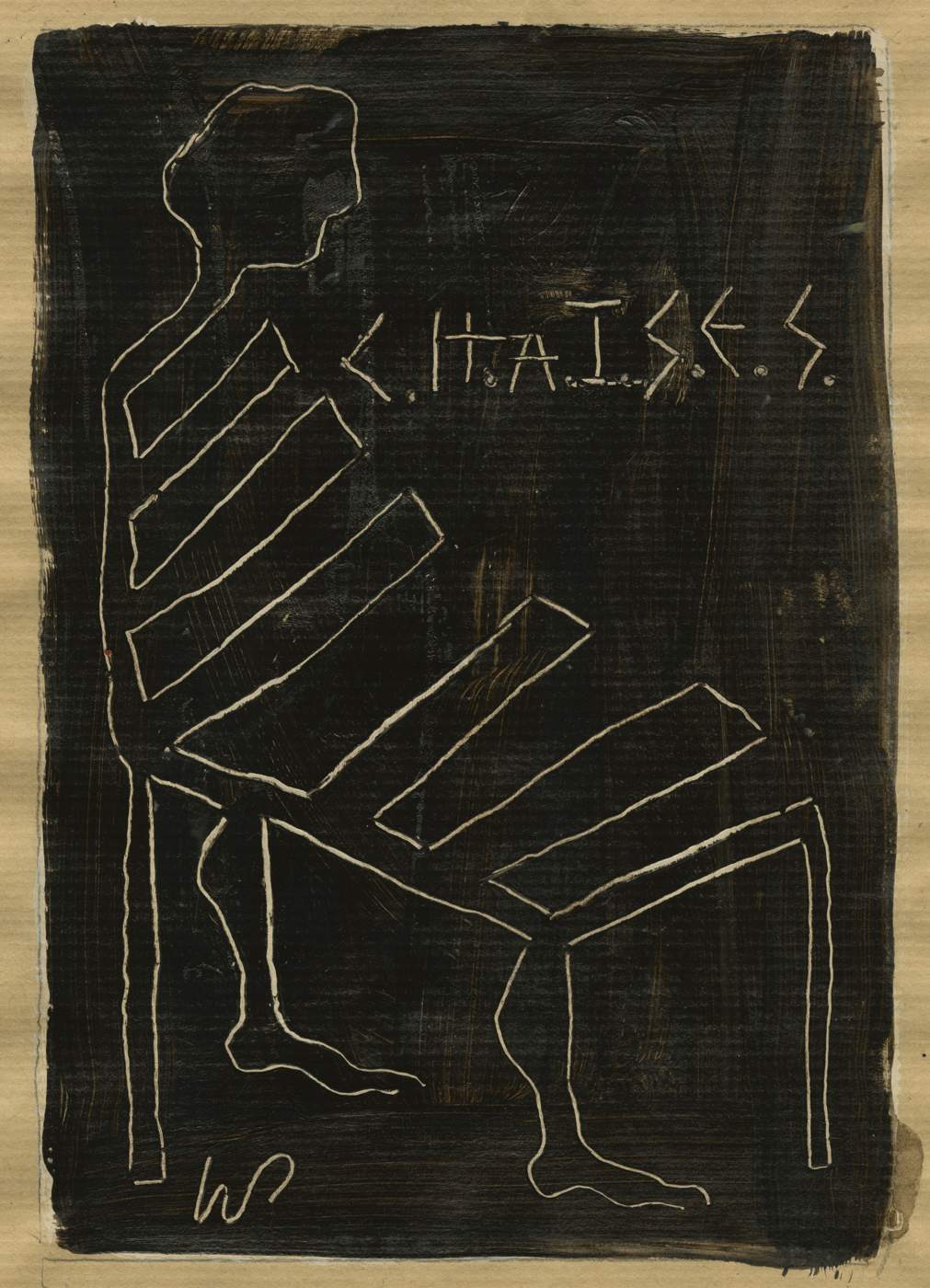
Oil painting carries the chairs into the picture plane — the same scenarios read through a painter’s hand rather than a plotted vector.

Sound

Instrumental voices scored from velocity, proximity, and social energy — layered with field-recorded gravel from Luxembourg Gardens.

Installation

The room itself — chairs, kinetic apparatus, sound and projection arranged so visitors walk into the geometry instead of looking at it.

Four social archetypes, observed daily

Each scenario encodes a distinct human interaction through the spatial language of chairs — proximity, orientation, velocity, stillness.

Sun-Worshipping

A solitary figure tracks the light, making slow angular adjustments as the sun crosses the garden.

Lovers’ Spat

Two chairs begin entwined, drift apart through tension, orbit in conflict, and either reconcile or leave.

The Reader

Deliberate isolation. The chair positions itself away from traffic, creates a buffer zone, and barely moves.

Chaises Braid

Strands that never touch and never separate — parallel lives holding an uncanny synchrony across the day.

Live choreography from scenario data

The visualisation below runs on the same canonical chair geometry and vector data that drives all project outputs — sculpture, sound, and export pipelines share a single source of truth.

t = 0.00

Building on Forsythe's spatial logic

Chaises draws on the analytical framework of William Forsythe's One Flat Thing, reproduced and the Ohio State University Synchronous Objects project — which decomposed a single dance into dozens of visual, spatial, and data-driven interpretations.

Forsythe's team decomposed a dance into data. Chaises works the other way round: social observation is scored as data, and that score generates sculpture, painting, sound, and installation at once. The chairs are both the instrument and the subject.

Synchronous Objects, OSU

A landmark project that produced 20+ visual objects from a single Forsythe dance — maps, 3D forms, generative drawings, and data visualisations. Chaises extends this methodology from the stage to the public garden, from professional dancers to the everyday choreography of social life.

The chairs come home

Chaises will be presented over three days in Le Marais — the historic heart of Paris, where centuries of creative life have shaped the streets, courtyards, and gathering places. The project returns to the city where it was born: where the green metal chairs of Luxembourg Gardens choreograph social life every morning without a director, without a score.

The installation turns its venue into a living field of chairs, sound, and projected movement — inviting audiences to witness the silent choreography they walk past every day.

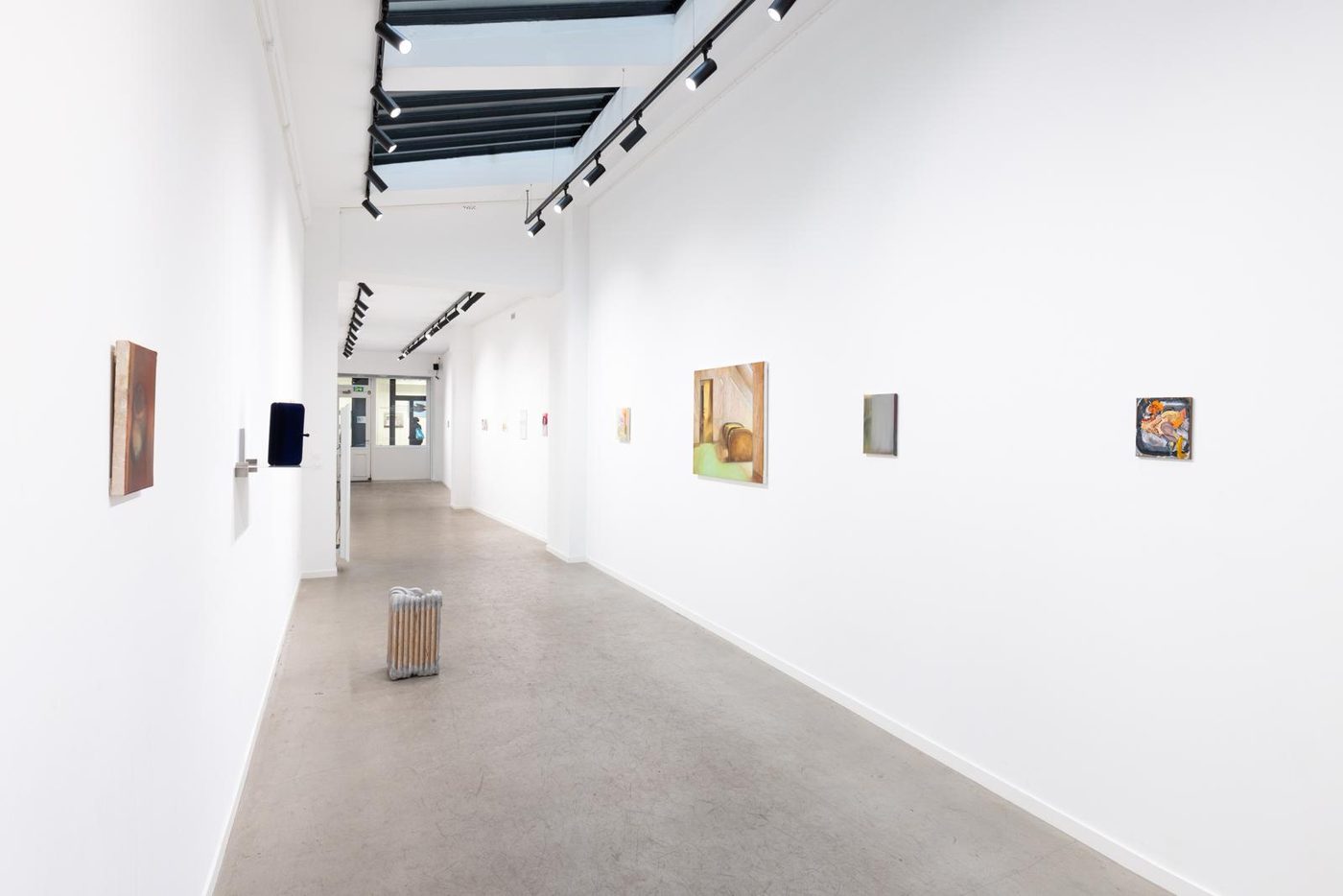
The gallery interior at 24 rue Chapon: a long white room with a skylight and works hung on both walls.
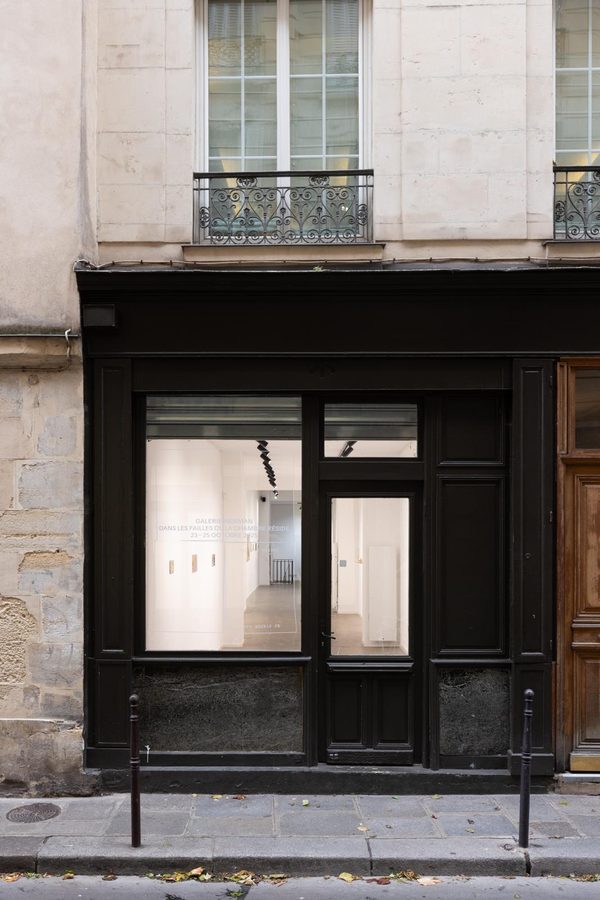
The black shopfront of 24 rue Chapon seen from the street.

24 rue Chapon, 75003 Paris.

Vernissage

Tuesday 20 October 2026

Open viewing

Wednesday 21 October 2026

Closing evening

Thursday 22 October 2026

A multidisciplinary collaboration

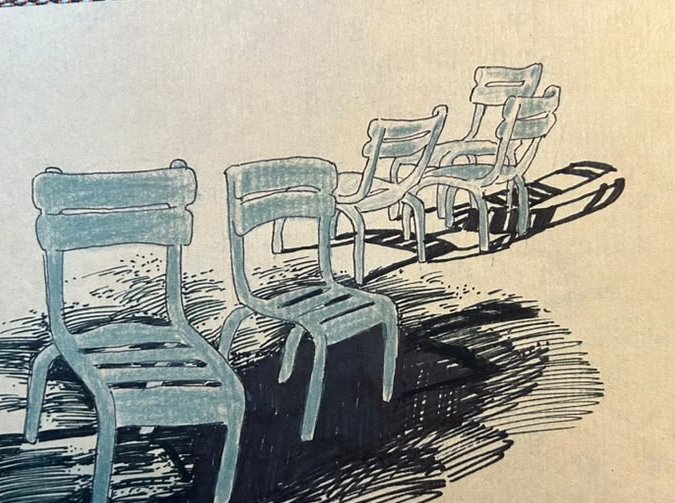
Ink drawing of a row of Luxembourg garden chairs casting long ink shadows, on cream paper.
Quinn Lewis — ink on paper, 2026
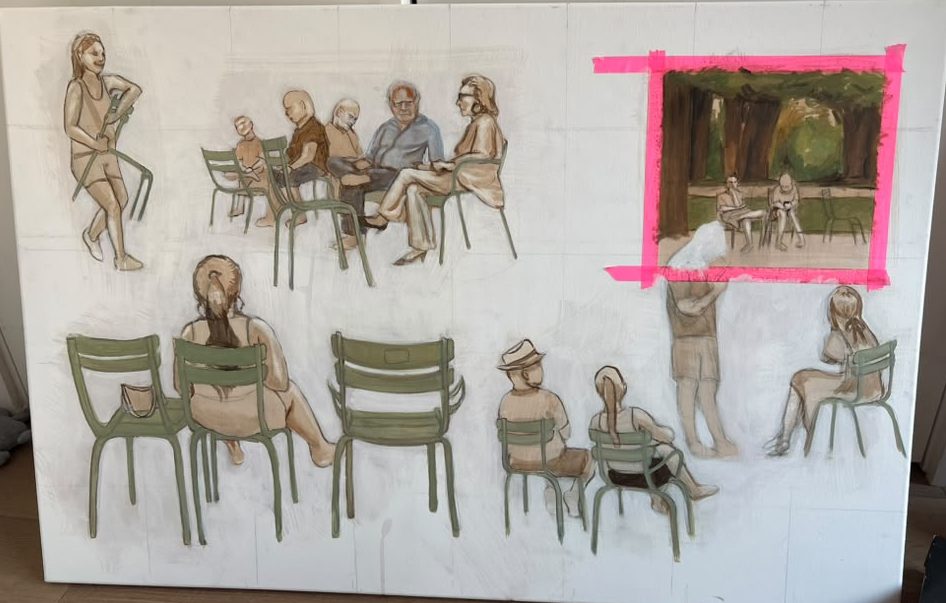
A large painting in progress: figures seated on green garden chairs, with an inset landscape framed in pink tape.
Charlotte Tampol — oil on canvas, in progress
J

Jimmy Gardner

Concept Creator & Supporter

Originated the observation. Conceived the project’s vision and supports its realisation across all four outputs.

A

Allard van Hoorn

Creative Director, Sound & Installation

Dutch, Paris-based. Maker of Urban Songlines. Leads creative direction, installation design and sound composition.

Q

Quinn Lewis

Kinetic Sculpture & Sequential Drawing

Simple machines and sequential storytelling. Builds the hand-cranked scroll machine that winds ink-drawn figures past drawn Luxembourg chairs.

C

Charlotte Tampol

Multidisciplinary Artist

Oil painting, printmaking, photography. Explores femininity and the sublime through art history and Filipino tattoo culture.

Full artist biographies →

New to the Wall Foundation

Chaises is produced by the New to the Wall Foundation, a private foundation that collects, exhibits and commissions work by contemporary artists, based in the Hudson Valley and working between New York and Paris.

Visit New to the Wall Foundation →